
Striped Venus Clams
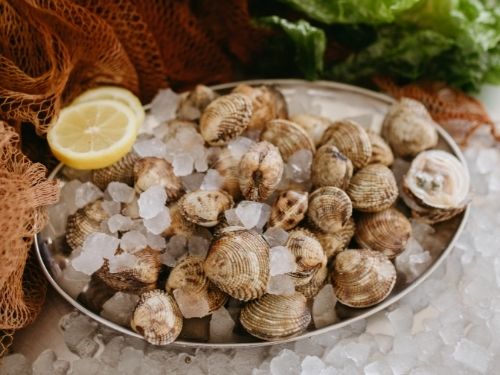
Striped venus clams are bivalve mollusks belonging to the Veneridae family, characterized by their round, smooth shape. Commonly found in the Adriatic Sea, they play a starring role in many traditional recipes. Often mistaken for clams, they are among the most appreciated seafood varieties.

Morphological characteristics and habitat of Striped Venus Clams

The shell is very light in color and marked with fine striations, and they are smaller in size compared to clams. Known for their flavorful and tasty meat, they pair well with a variety of ingredients. One of the distinctive features of this mollusk is its tiny foot, almost invisible to the naked eye. It protrudes from the shell by only 2 mm (making it nearly unnoticeable).
Their widespread presence in the Adriatic Sea is due to their preference for sandy, shallow seabeds, an environment highly suited to their needs.
In addition to the Adriatic, they can also be found in:
- the Caspian Sea;
- the Black Sea;
- the Eastern Atlantic (European and North African coasts).
Due to their availability and abundance, they have long been considered “the poor men’s food”: back in the 1940s and 1950s, they were collected by hand, digging in the sand (since they live in shallow waters, it wasn’t necessary to venture far from the shore).
Nutritional values of Striped Venus Clams

An 80-gram serving of Striped Venus Clams contains about 100 calories. They are low in fat and rich in proteins and minerals, essential for many vital functions, including:
- Sodium;
- Phosphorus;
- Selenium;
- Potassium;
- Iron;
- Calcium;
- vitamin A.
They have a unique, delicate flavor and are sought after by seafood lovers who want the perfect balance between refined taste and lightness. Given their low calorie content, they’re also a great ally for those watching their diet.
In the kitchen, Striped Venus Clams are used in countless recipes: from the traditional fish soup to the
timeless spaghetti with seafood.
Striped Venus Clams vs. Clams: their differences and how to tell them apart
 These two types of shellfish are often confused and used interchangeably in recipes. However, the differences between clams and striped venus clams are actually quite significant, in both physical characteristics and flavor. Let’s start with the basics.
The first structural difference is in the tentacles. Clams have visible tentacles that extend out of the shell, while lupini clams do not. This is a key detail to help tell them apart. Additionally, striped venus clams are smaller than clams.
The third major difference lies in taste: farmed clams have a milder, less intense flavor compared to striped venus clams, which have a taste more similar to that of wild clams.

CHAMELEA GALLINA

Dosinia exoleta
Other Products




Where we are
83 Lufrano Street
Volla, NA 80040
our schedules
H24 distribution
Office 9 – 18


