
SCALLOPS
They live in waters all around the world, have a delicious flavor and are packed with beneficial nutrients. The answer? Scallops of the Pectinidae family. Naturally low in fat, scallops are ideal for a variety of dishes and suit numerous diets. In this article we’ll explore their technical features, natural habitat and nutritional value, highlighting the many health benefits they offer.

Scallops: description and technical characteristics

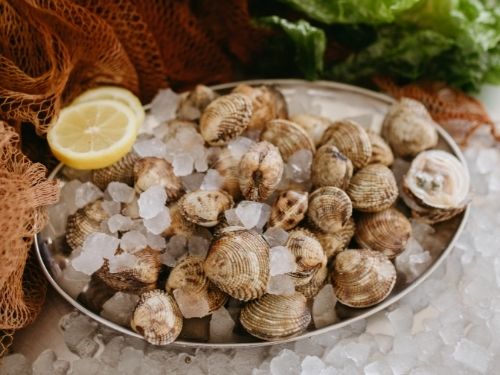
When we talk about scallops, we’re referring to a specific type of bivalve mollusk within the Pectinidae family. The name comes from their comb-like shape, due to the presence of clearly visible radial ribs on their shells. This distinctive trait makes them unique compared to other mollusks.
Their shells are slightly elongated and rounded, and feature two lateral extensions known as “auricles”. Their auricles (meaning the two side expansions) are different in shape and have a great distinctive feature. The posterior auricle is significantly smaller than the anterior one.
These mollusks have numerous eyes along the edge of their mantles, that’s why they can quickly react to threats and move efficiently through rapid valve movements to escape predators.
The external surface of the shell has pronounced fan-like striations, often in orange to purplish tones (this may vary depending on the specific species, which we will examine later in this article).
As for size, scallops generally range from 5 cm to 9 cm (though this too can vary by species).
Habitat, distribution and harvesting of scallops

Scallops prefer sandy seabeds and are typically found at minimum depths of 10 meters (and can get up to 40 meters). In Italy, they are most commonly found in the Adriatic Sea, but are also present throughout the Mediterranean Sea and the Eastern Atlantic (from Norway to the Canary Islands).
Interestingly, the Isle of Man in the British Isles hosts a large population of scallops and even celebrates them with the “Queenie Festival”. The name of the festival comes from the fact that scallops are known by the locals as “queen scallops”. Due to population decline, the UK has enacted strict conservation measures, including no-fishing zones to aid in stock recovery.
Scallops are filter feeders, primarily consuming plankton.
When and how are scallops harvested? The best time to catch scallops is during their migration period. Fishermen typically use the following fishing methods:
- Bottom trawling nets;
- Dredges;
- Rakes or drags.
Scallops: nutritional value and consumption guidelines
Scallops are widely included in nutritional plans due to their rich content of minerals, high-quality proteins and vitamins (especially Vitamin A and Vitamin E). They provide 93 kcal per 100 grams. Caution is advised when consuming these in the presence of specific food allergies or during certain life stages (such as breastfeeding, pregnancy, or early childhood). That’s why we always recommend consulting your trusted healthcare provider before consumption.
How to tell if a scallop is fresh:
Scallops must be alive at the time of purchase. To check for freshness, look for the following signs:
- Vital reaction: they respond to tapping on the shell;
- They resist opening;
- They have intervalvular liquid inside the shell;
- Shells are intact;
- No dirt or residue on the outer shell;
- inside the shell, we have a hydrated (key aspect), tumid fruit adhered to the shells;
- The inner shell surface is shiny;
- The flesh is creamy-white, and the adductor muscle is bright orange.
It’s also important to pay attention to the smell, which should be fresh, briny and reminiscent of the sea. Watch out for unusual colors too: if the hue looks off, it’s best to avoid eating them.
The main scallop species: let’s take a closer look.
There are six main species of scallops:

Chlamys Glabra

Pseudamussium Clavatum

Chlamys Opercularis

Flexopecten Proteus

Argopecten Tehuelchus

Chlamys Varia
Other Products




Where we are
83 Lufrano Street
Volla, NA 80040
our schedules
H24 distribution
Office 9 – 18


