
SCALLOPS
Beautiful to look at. Delicious to eat. Yes, we’re talking about scallops, mollusks prized in the kitchen for their delicate and unique flavor, fresh flesh and sweet, tender texture. Let’s uncover all the secrets of this refined seafood delicacy, enclosed in a stunning natural shell.
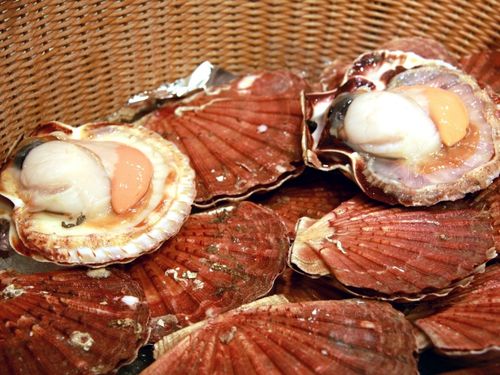
What are scallops?

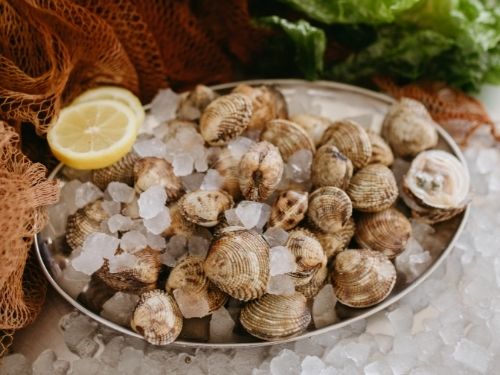
Boasting remarkable organoleptic properties, scallops are bivalve mollusks, also known as Saint James shells (we’ll discover why in this article). They feature two external shells with distinct concentric ridges and reddish-orange hues. The two valves are joined by a strong hinge and each typically has between 12 and 16 ribs. Their eyes are catadioptric: but what does that mean? It means they work based on the principle of reflection.
Inside the shells, we can identify three distinct parts:
- The socket (often used to make seafood broth due to the high presence of sand). It has a hazelnut color and surrounds the coral;
- The coral, soft in texture, is known for its crescent shape and bright orange color;
- The nut, the most important part, appearing as a firm white muscle.
Thanks to the rapid opening and closing of their shells, scallops can swiftly propel themselves across sandy seabeds.
The history of scallops: from Saint James’ pilgrimage to the legend of Aphrodite

Scallops have a long, very long, past. They’ve always been associated with Aphrodite, the goddess of love and beauty. According to the legend, Aphrodite emerged from the waters of the island of Cyprus standing on a magnificent pearlescent shell shaped like a fan. For this reason, the scallop has come to symbolize femininity, beauty and fertility.
Another historical use dates back to the Middle Ages, when priests used scallop shells to pour holy water on those receiving the sacrament of baptism.
Let’s see now the meaning behind its diffused name: Saint James shell. In medieval times, pilgrims would journey along the Camino de Santiago. Upon reaching the final destination, tradition held that they were to undress, burn their clothes and don a simple white robe. They would then collect scallop shells from the ocean shore and sew them onto their cloaks. These shells served as a tangible sign that they had completed the pilgrimage and reached the tomb of the apostle James (the Sanctuary of Saint James). Pilgrims would present the shells to authorities as proof of their journey.
Characteristics of scallops: habitat, harvesting and nutritional properties

Scallops are widely found in both the Mediterranean and Atlantic waters. They thrive on sandy seabeds at depths ranging from 25 to 200 meters. What distinguishes young scallops from adults? The first anchor themselves to the seabed using byssal threads , while adults are free-moving thanks to the rapid opening and closing motion of their shells.
They are harvested using bottom trawling or special dredges. Their flesh is plentiful yet never rubbery, delicate yet firm, with a flavor and texture that can satisfy the most discerning palates. In fact, their consumption is only slightly lower than that of their close relatives (mussels and oysters).
Like all shellfish, scallops are rich in healthy fats and omega-3 fatty acids. They are antioxidant and contain vitamins A and B group. They’re also an excellent source of potassium, sodium, magnesium, selenium, and phosphorus. As always, it’s important to consult your healthcare provider for proper dietary advice.
Three fun facts about scallops: what you absolutely need to know
Their shell, beyond serving essential functions for survival, is highly sought after by collectors and artisans. Thanks to their elegant shape, they are often used as mini serving plates for mousses or appetizers, as decorative holders, or even as refined ashtrays. Throughout history, scallop shells have appeared frequently in ancient art and architecture (their shell is part of the coat of arms of Pope Benedict XIV).
Scallops are among the first shellfish and food sources ever consumed by humans, according to historical records.
The final curiosity revolves around a long-standing Italian linguistic debate: is it capasanta or cappasanta? The most widely accepted and recognized form is capasanta , which is believed to derive from the Venetian cappasanta. The term cappa refers to the cloak worn by pilgrims during the Camino de Santiago mentioned earlier. The scallop is also known by various regional names, including:
- Cappa pellegrina;
- Cocciola pellerina;
- Pellegrinu or pettini in Sardinia and Sicily.
The main species of scallops: let’s take a look
There are 6 main species:

PACIFIC SCALLOP

EASTERN SCALLOP
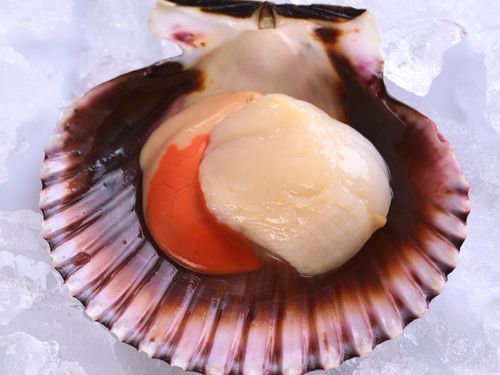
ATLANTIC SEA SCALLOP

Shell of St. James
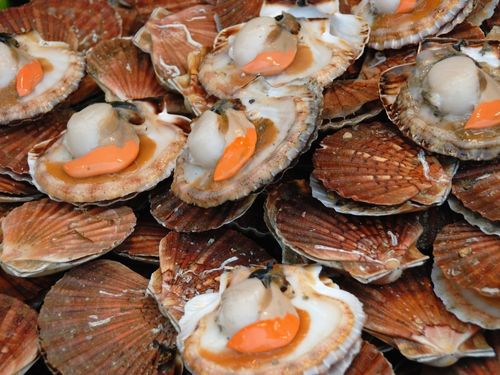
NEW ZEALAND SCALLOP
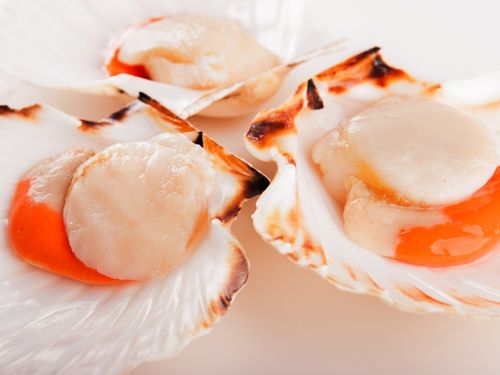
KING SCALLOP
Other Products




Where we are
83 Lufrano Street
Volla, NA 80040
our schedules
H24 distribution
Office 9 – 18


