
MERETRIX LYRATA
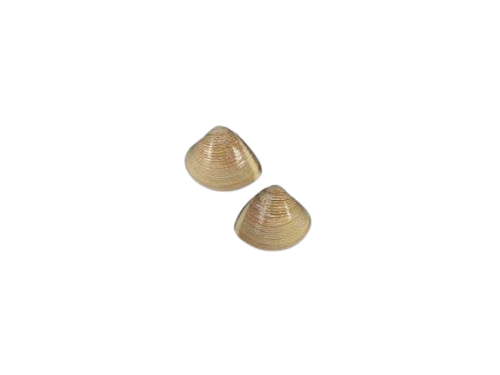
Meretrix Lyrata, commonly known as the Pacific Clam, reaches a maximum length of 6 cm. Due to its pale shell, it is also referred to as the White Clam.
Morphological characteristics of Meretrix Lyrata
The shell is robust and thick, with a solid structure. It is equivalve but inequilateral, with an oval to slightly subtriangular shape, and the anterior and posterior margins are slanted.
The valves display the following features:
- The posterior area is flattened and inclined;
- The outer surface bears numerous, prominent concentric growth striae, which become more pronounced near the posterior margins;
- The hinge of the left valve has one lateral tooth, while the right valve bears two lateral teeth;
The pallial sinus is broad and relatively shallow, with a rounded shape at the anterior end.
External and internal coloration
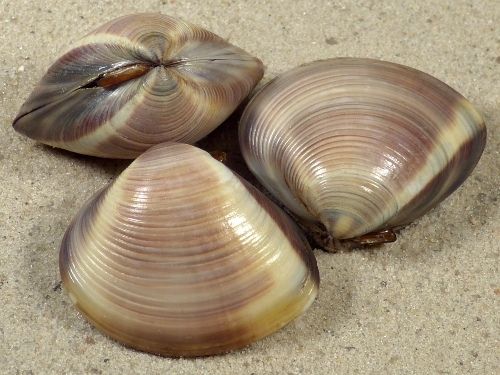 The external coloration ranges from:
- Brownish to light brown;
- Creamy white, from which the name White Clam derives.
On the external shell, a broad dark brown band is often visible along the posterior dorsal margin. The inner surface is porcelain white.
Distribution of Meretrix Lyrata
As its name suggests, the species is distributed throughout the western Pacific, from western Indonesia to the Philippines, and from southern Indonesia to the East China Sea.
Other Products





Where we are
83 Lufrano Street
Volla, NA 80040
our schedules
H24 distribution
Office 9 – 18


