
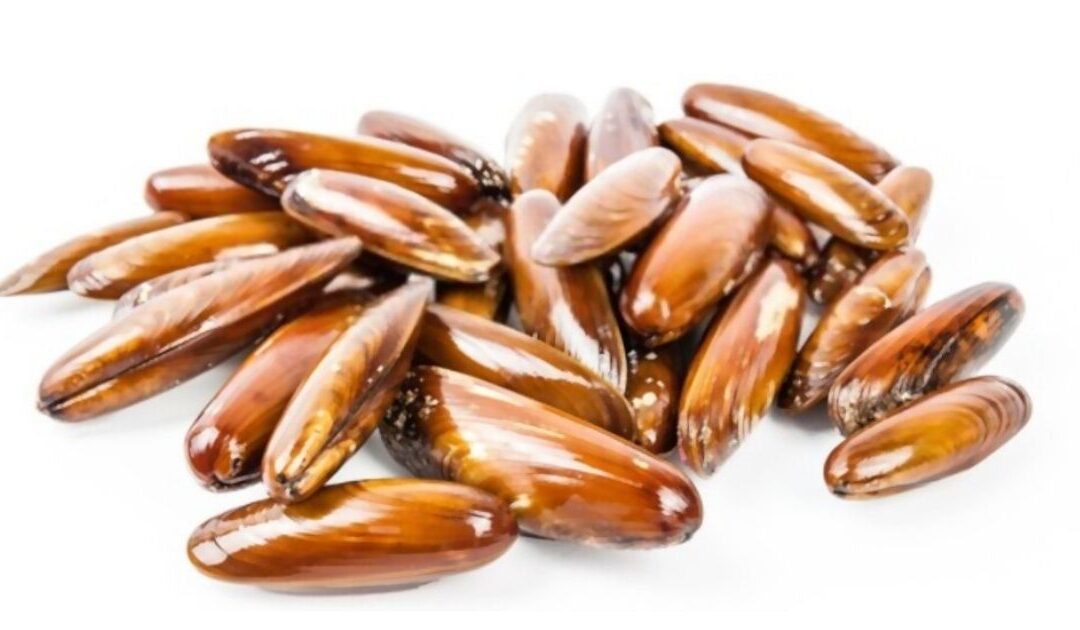
Date mussels are among the most prized shellfish. They have a unique, unmistakable flavor and several health benefits. The problem with them, however, is that, in recent years, their harvesting has been banned and both fishing and consumption are now subject to severe penalties. Let’s explore why these shellfish are considered illegal and the reasons behind this prohibition.
What are date mussels? Their key characteristics
 Date mussels, scientifically known as Lithophaga lithophaga, are a species of bivalve mollusk. They feed on plankton, algae, and organic matter by filtering them from the water. They live embedded in limestone rocks, going deep into their interior.
These mollusks are highly valued and relatively unknown to many, which often leads people to wonder what they are exactly. To understand date mussels better, keep in mind that these mollusks that are very similar to mussels. The difference between the two is that date mussels have longer, brown shells, unlike the black shells of common mussels.
Their flavor is very similar too, somewhere between mussels and oysters. However, date mussels are much more prized and expensive, often costing nearly three times more than oysters.
Where can you find date mussels?
We’ve covered what they are and how they live, . now let’s look at where they grow and why you won’t find them on menus in Italy.
Date mussels inhabit limestone rocks – they dive deep into these rocks -, which are mainly found in the Mediterranean Sea and the Atlantic Ocean.
Why is date mussel fishing illegal?
 As we mentioned, despite the delicacy of these mollusks and their flavor being ideal for many recipes, the harvesting of date mussels is illegal and the reasons are quite straightforward.
These mollusks are classified as a protected species
because:
- Harvesting them requires the destruction of their habitat. Extracting them involves breaking the rocks they live in using pneumatic hammers, pickaxes, or even explosives, causing severe damage to the marine rocky seabed;
- They grow extremely slowly. Date mussels can reach up to 8–10 cm in length, but it takes them 15 to 35 years just to reach 5 cm. As such, fishing them could lead to their extinction.
In 2017, environmental regulations were updated to recognize the harvesting of date mussels as harmful to marine biodiversity and ecosystems.
In Italy, the fishing and trade of date mussels have been illegal since 1998 (Ministerial Decree of October 16, 1998). The rest of Europe followed suit in 2006 under EU Regulation No. 1967/2006.
It has been
established that “the capture, possession on board, transshipment, landing, storage, sale, display or offering for sale of the date mussel (Lithophaga lithophaga) are prohibited.”
Unfortunately, this doesn’t mean that everyone complies with the law. On the contrary, as it often happens, the fishing ban has only made date mussels even more valuable, fueling a thriving black market.
Illegal date mussels: what are the penalties?
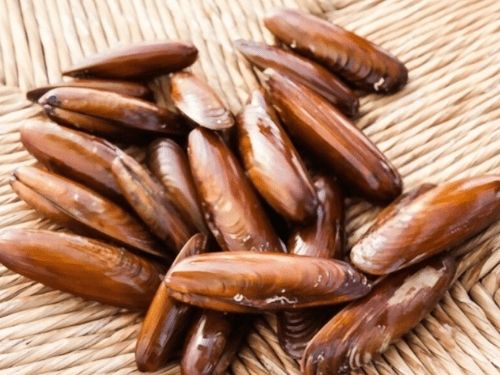 Despite the ban on date mussel fishing, many people still catch and sell these mollusks illegally, these mollusks have been the center of attention of criminal organizations too, as several investigative reports have revealed. The Guardia di Finanza (Italian Financial Police) frequently seizes large quantities of illegally harvested date mussels; over the past few decades, there have been numerous operations aimed at stopping this environmental disaster and curbing the illegal fishing and trafficking of these shellfish, with frequent seizures and legal actions.
Those who violate the law can face a range of penalties:
- confiscation of the harvested shellfish;
- confiscation of the equipment used;
- imprisonment from 2 months to 2 years;
- fines ranging from €2.000 to €12.000.
It’s also important to note that penalties don’t apply solely to those who fish or sell date mussels: anyone who serves or even consumes them may also be subject to sanctions. That’s why it’s important to be vigilant, even as consumers, in case we are unknowingly served date mussels.
If that happens, we must report it and avoid eating them. To report someone who fishes for or serves date mussels, you should contact the Coast Guard or the Forest Police.
Date mussels: a sustainable alternative to protect the environment
To tackle the issue of illegal date mussel fishing, several proposals have been put forward. One of the most concrete involves the farming of a white variety of date mussels.
White date mussels grow more quickly and their cultivation could offer an environmentally friendly solution. In controlled farms, the mussels would be placed inside specially made cement blocks, the destruction of which during harvest would not harm the landscape or marine ecosystems.

