

One thing all seafood lovers can agree on is how delicious mussels are. These shellfish are known worldwide and can be enjoyed in a variety of ways, as they always maintain their fantastic flavor.
The sea itself seems to be enclosed within these small, oval-shaped shellfish, which range in color from yellow to orange and are encased in shells that preserve their firm texture. . Let’s face it: these tiny mollusks are more valuable than they might appear.
Mussels also offer numerous health benefits, making them highly nutritious, but they should still be consumed in moderation, as they’re not always suitable for everyone.
Let’s take a closer look at the health benefits of mussels.
The health benefits of mussels
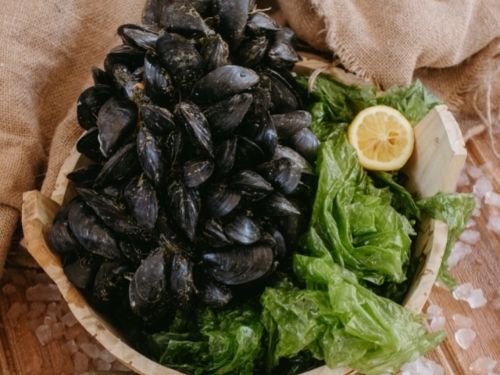 The benefits of mussels are many: they protect the body by providing important minerals such as sodium, calcium, magnesium and phosphorus.
These tasty mollusks are also rich in protein and contain Vitamin C, which offers strong antioxidant properties. Thanks to their Omega-3 content, they help support heart health and – believe it or not – eating mussels might even improve your mood, thanks to the presence of riboflavin.
For those suffering from anemia, including mussels in your diet can be especially helpful: they’re also a good source of iron. And since they’re low in calories, even those following a low-calorie diet can enjoy the benefits of mussels.
So, if you’re looking for a mood boost, eating these spectacular shellfish might just help, but remember: moderation is key!
Nutritional values of mussels
According to Humanitas Research Hospital, 100 grams of mussels provide the following nutritional breakdown:
- 56% protein;
- 29% fat;
- 15% carbohydrates.
These categories also include: water, vitamin A, vitamin C, potassium, sodium, phosphorus, calcium, magnesium, iron and zinc.
All of these elements are important for a healthy diet, but some others may not be as beneficial. That’s why we’ll now answer an important question: how should mussels be consumed in the presence of high triglycerides and cholesterol?
Mussels and triglycerides
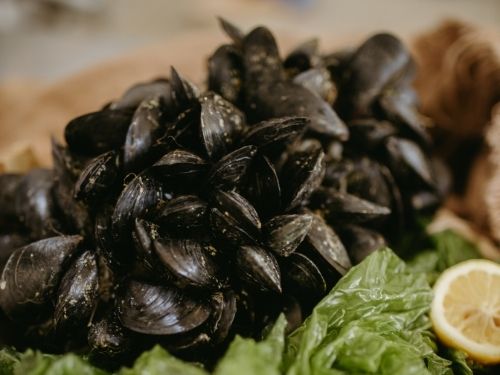 These delicious seafood treasures also contain triglycerides, something you’ve probably heard of, but what exactly are they?
Triglycerides are fats found in our blood, produced by the foods we eat, so they are a natural part of our body and — if consumed moderately — they’re not harmful. In fact, they’re our main source of energy.
However, in excess, triglycerides can negatively affect our health, that’s why certain foods should be consumed in moderation.
How often you eat mussels can significantly impact certain health conditions: a healthy person (without elevated triglyceride levels) can enjoy seafood about once every 10 to 15 days.
Those suffering from high blood pressure, high cholesterol, or elevated triglycerides should avoid mussels almost entirely. If you find it hard to give them up, it’s best to consult a nutritionist to determine how they can be safely included in your diet.
Mussels and cholesterolemia
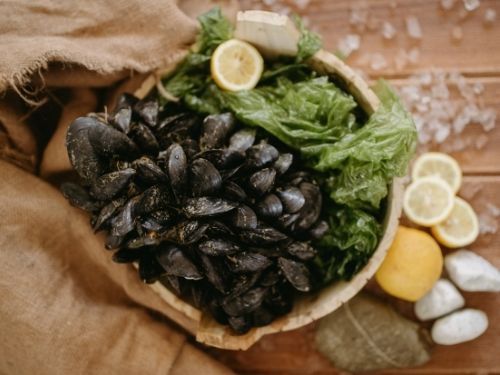 Cholesterol is an important organic molecule often seen as a villain, but the truth is more nuanced than what we usually hear
Cholesterol is a type of fat that, like other triglycerides, performs essential functions in the body: it helps produce vitamin D, steroid hormones and bile salts. It also plays a role in regulating the fluidity and permeability of cell membranes.
So, even if you’re not a doctor, you can understand that cholesterol is vital to human health.
Just like in a cop movie with a good cop and a bad cop, cholesterol comes in two forms. Good cholesterol is the one that performs the beneficial functions mentioned above; bad cholesterol – which refers to an excess of good cholesterol – can hinder blood flow and cause serious issues in our arteries.
In the previous paragraph we mentioned the link between mussels and triglycerides, but cholesterol is also present in this small and delicious mollusk: mussels are among the seafood with the highest cholesterol content, which is why people with high cholesterol should avoid them.
Despite these contraindications, limited consumption may be permitted if it has the approval from your doctor.
Avoid during pregnancy
 There are certain times in life when eating mussels is best avoided and one of these is during pregnancy.
Pregnancy is a wonderful moment for women, but it is also a delicate and short one and, since mussels filter a large amount of seawater, they also accumulate harmful substances. That’s why it’s better to avoid consuming them during pregnancy.
We recommend speaking with your trusted gynecologist for other, specific, information.
Well, now you know everything. We hope these tips were helpful and please, feel free to reach out to us with if you have any questions!

