

The climate change affecting all of humanity in recent years has drastically changed our way of life. No one could have imagined that the saying “the seasons just aren’t what they used to be” would turn out to be the prelude to a much deeper environmental crisis, one that is now destroying our soil, waters and overall balance.
More than ever, climate change has become a topic that concerns and connects us all. The severity of recent events is pushing each of us to become more aware of the issue and take responsibility in hopes of reversing the alarming direction our planet is heading to.
Yet, there are moments when it feels like destiny’s already been written: scorching, dry summers that have become the norm; growing water shortages leading to rationing in some towns; crop failures (caused by floods and droughts); and pollution wreaking havoc on both land and sea: all these issues make anyone who cares about this topic feel profoundly discouraged.
And yet, just when it seems that hope is fading, a glimmer of light emerges from the depths of the sea: mollusks.
These resilient marine animals, as we’ve explored in previous articles, serve as natural filters for our waters. They trap CO₂ in their shells and help return cleaner air to our environment . Unfortunately, these valuable sea creatures are now seriously threatened by ocean acidification, which is severely affecting both their survival and their incredible “work”, crucial for our survival.
Nevertheless, despite the many threats posed by human-driven environmental changes, mollusks continue confirm they are incredibly adaptive. Unfortunately though, the growing impact of human activity along coastlines could put these creatures, and the entire marine ecosystem, in grave danger.
What are mollusks and why are they so important to the environment?

When we talk about mollusks, we’re referring to a large and diverse group of marine and terrestrial organisms known for their soft bodies and lack of internal skeletons.
Some mollusks have shells, while others do not. They’re delicious to eat and incredibly useful for the environment. In fact, Italy’s annual production of 95.000 tons of mussels can capture and store about 20.000 tons of carbon dioxide.
We’re talking about real natural purifiers of our seas, that’s why they currently hold the highest concentration of microplastics among marine organisms.
That’s right: shells, mussels, clams and oysters can only properly form thanks to the process of the biomineralization of the carbon extracted from the atmosphere, where it exists in the form of CO₂. Ironically, the very gas most responsible for global warming is also essential to the survival of these marine animals that, by storing it, help us breathe and survive in return.
The problem is, however, that the current surge in CO₂ emissions is now overwhelming the purification process these organisms perform. Rising temperatures threaten to undermine their adaptability, ultimately disrupting their filtration systems and, in the worst-case scenario, leading to their extinction.
According to a new study published in Global Change Biology and led by Professor Daniele Scarponi from the University of Bologna, if we can reduce and manage the direct human impact on coastal zones, the ecosystems of the Adriatic Sea may still be able to adapt, even in the face of rising temperatures. The future, once again, is in our hands.
The Study called: resilient biotic response to long-term climate change in the Adriatic Sea

Professor Daniele Scarponi, of the Department of Biological, Geological and Environmental Sciences at the University of Bologna, led this groundbreaking research that shows us new insights of the future of our seas and our own survival.
The study focuses on the adaptability of marine fauna in the Adriatic over the past 130.000 years.
Unfortunately, due to factors like pollution, overfishing and the introduction of invasive species, these same areas may soon reach a tipping point where mollusks and the broader marine ecosystem can no longer adapt.
Researchers collected 223 coastal sediment samples and analyzed the fossilized remains of marine life in shallow areas of the Adriatic influenced by river systems.
These fossils come from three distinct time periods:
- 120.000 years ago, when the Mediterranean was warmer (the previous interglacial period)
- 20.000 years ago, when average temperatures were 6°C lower than today (the last glacial period)
- 5.000 years ago, with temperatures similar to current levels but before any significant human impact
By comparing fossils from these three periods, researchers were able to confirm the remarkable resilience of marine fauna. Mollusks, in fact, altered their biological structure in response to changing climates and then returned to their previous forms when environmental conditions stabilized.
Their strategy is a slow but steady migration in response to natural climate shifts. This is why scientists believe mollusks are naturally capable of adapting to rising temperatures.
The one and only condition: any human action that affects climate change must be reduced to the bare minimum.
Future scenarios and the survival of marine life
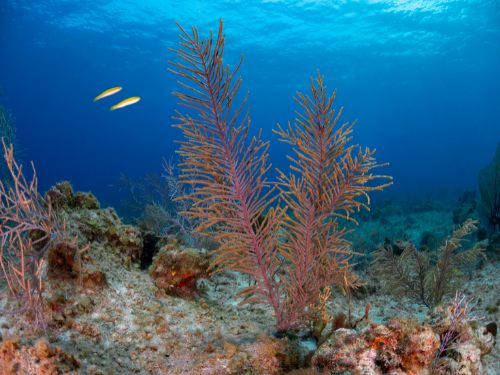
The survival of marine life and mollusks truly lies in our hands, as clearly demonstrated by the study Resilient Biotic Response to Long-Term Climate Change in the Adriatic Sea.
Mollusks have repeatedly proven their resilience to climate change over the centuries. What now poses the greatest threat to their continued existence is human activity.
At this point, the choice is ours: will we reduce our environmental impact and help guarantee the survival of marine life, or will we continue down a path that leads to its irreversible extinction?
Predicting the future is neither easy nor entirely possible. In truth, there are two plausible paths to follow and the fate of marine ecosystems now officially and scientifically depends on human action.
We can say that with responsible and conscious human behavior, it’s not only the mollusks that will benefit, but our very own survival.
So, if we want to keep breathing clean air, let’s start by respecting the sea and all the living organisms that, even now, struggle with incredible courage to give us the best possible quality of life.

