

You may not know it, but among the innocent victims of war, the environment is often at the forefront. Yes: war pollutes, a lot.
This article isn’t meant to lecture anyone, but rather an invitation to think about how, over hundreds of years, environmental degradation has also been fueled by war.
What will be the environmental cost of the conflict between Ukraine and Russia? Before answering, we analyzed what are the damages that, due to past wars, we are still trying to deal with today.
The main environmental damages caused by war
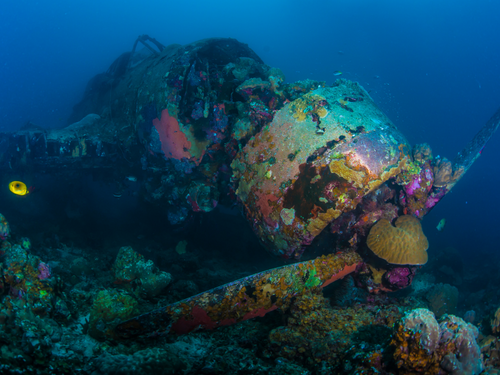
The Gulf War, the wars in Yemen and Syria: what all these tragic events have in common, beyond the devastating loss of innocent lives, is their environmental impact. The air, soil, and water are all affected and often heavily contaminated:
- Fine particulate matter increase in the atmosphere;
- Debris left on the ground often contain acidic or toxic substances: all these, along with heavy metals, slowly leach into the soil and pollute groundwater, making it undrinkable;
- Metals used to produce weapons have both economic and social costs, and instead of being properly disposed of, they remain in the environment and they keep contaminating it;
- Oil and gas are heavily consumed during military exercises and armed conflicts.
The list goes on but one thing is sure, and that’s that one of the most significant environmental impacts of war is the increase in carbon dioxide emissions.
What history tells us
Data like the above come from centuries of conflict, which have only served to worsen the global climate crisis. Considering World War I, for example, we can still see the damages we’re still dealing with today, over 100 years later, in northeastern France. In one case, a farm had to destroy its entire harvest after a ton of old artillery shells was discovered buried in a nearby field. As if that wasn’t enough, each year, northeastern France is still involved in the disposal of nearly 500 tons of unexploded ordnance.
The situation in Belgium and Germany is not the best either: due to World War I, large areas of land remain unsuitable for farming because of unexploded ordnance or soil contaminated by heavy metals and chemical weapons residue.
World War II was no exception as well: in Italy, tens of thousands of chemical weapons were dumped into the southern Adriatic Sea and the Tyrrhenian Sea as a way to dispose of them quickly and quietly.
Ecocides that devastated our lands and seas
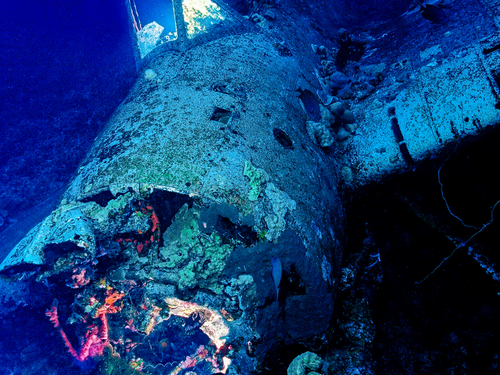
The term “ecocide” has its roots in the Vietnam War. Between 1962 and 1971, U.S. military forces sprayed more than 75 million liters of toxic chemical herbicides, enough to fill 30 Olympic swimming pools, across South Vietnam.
The aim was to destroy forest cover and food sources used by enemy troops.
What no one fully anticipated was the devastating aftermath: widespread illness – often fatal – and sterile forests unable to recover. This led American biologist Arthur W. Galston to coin the term ecocide in the 1970s to protest the massive environmental and social destruction that had occurred.
Several countries have since implemented domestic laws on ecocide, including Russia, Kazakhstan, Kyrgyzstan, Tajikistan, Belarus, Ukraine, Moldova, Armenia, and Vietnam. According to Vietnam’s 1999 criminal code: “Anyone who, in times of peace or war, commits … acts of ecocide or destroys the natural environment shall be sentenced to 10 to 20 years of imprisonment, life imprisonment, or death penalty.”
During March, Ukraine’s Office of the Prosecutor General launched criminal proceedings for ecocide following Russia’s seizure of two nuclear power plants, citing the threat of a potential nuclear explosion.
The first signs of war’s environmental impact in Ukraine

It’s hard to make precise estimates while the conflict is still ongoing, but we can already see the first signs of the environmental toll that the war between Ukraine and Russia is taking.
The Turkish Marine Research Foundation, an environmental protection organization active since 1996, warns that the war may lead to a wildlife crisis.
The problems are vast and stem from multiple sources. Just to name a few:
- Fuel leaks and pollutants from sunken ships are releasing toxic gases into the atmosphere;
- The Dnieper River is carrying heavily polluted water, contaminated by toxic substances from munitions, into the sea
- An excessive number of naval mines released by both sides into the Black Sea has forced Turkish fishing boats to halt operations due to the risk of accidents;
And do not underestimate radar and sonar noise: this is seriously disrupting the activity of marine creatures, which rely on sound to navigate and hunt.
One alarming indicator: over 100 dolphins have been found stranded on Turkish shores since the war began: a staggering number.
Recent reports from California also warn that rare and endangered animal and plant species are under severe stress due to the conflict and there’s also evidence of a significant deterioration in the Black Sea’s water balance.
As if the critical situation of marine mollusks, and their survival in the sea, wasn’t already worrying enough.
Unfortunately, today more than ever, these vital sea creatures are under serious threat due to ocean acidification, which is severely disrupting their survival and their vital role in our ecosystem. These resilient marine animals act as natural filters, trapping CO₂ in their shells and helping to purify our waters and air.
Ukraine demands environmental damage compensation from Russia
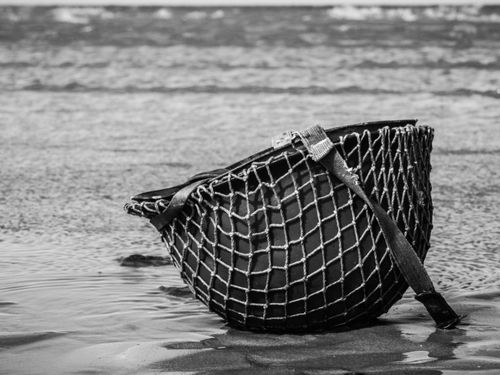
Ukraine’s Ministry of Environment has launched a legal strategy aimed at using international law to hold Russia accountable for environmental damage caused by the war.
The Ukrainian government plans to present its case to the International Court once the conflict ends. The estimated claim could total $350 billion ( ccording to a joint report by the World Bank, Ukrainian authorities, and the European Commission).
Documenting environmental destruction is one thing, quantifying its monetary value in a way that would enable Ukraine to demand reparations from Russia is.. quite another challenge.
Dmytro Zaruba, deputy head of Ukraine’s National Environmental Inspectorate, took part in one of the ministry’s first inspections in March at the site of a Russian attack near Lviv, in western Ukraine. There, the once-glimmering white fuel tanks of an oil depot had been reduced to charred wreckage. Craters nearly 30 feet deep scarred the ground, while fragments of Russian missiles were scattered among the debris. Blackened tree remnants surrounded the site, and oil from the destroyed tanks had seeped into nearby rivers, killing fish and other wildlife.
Serhii Trofanchuk, who leads one of the regional divisions of the Ministry of Water Resources in eastern Ukraine, stated that his team has continued to collect water samples from local rivers, finding evidence of contamination from pesticides, petroleum products, mercury, nitrates, and phosphates. Attacks on water management facilities have contributed to this pollution, while strikes on dams and other infrastructure along the Siverskyi Donets River—the main water source for over three million people in the region—have caused water levels to drop, preventing river currents from flushing out these harmful substances.
Let’s do the math: how much is the war costing the environment?
The best way to summarize this issue is through the latest data published by Ukraine’s Ministry of Environmental Protection regarding the environmental (and economic) damage caused by the ongoing war with Russia:
- $24.6 billion in damages caused by air pollution
- $11.4 billion related to soil degradation
- Of this, $8 billion concerns damage to water resources
- One-third of Ukraine’s forests has been damaged by the conflict
- Total atmospheric emissions already exceed 67 million tons (31 million tons of CO₂ equivalent can be directly linked to the Russian invasion).
These data are only preliminary: the conflict is still ongoing and, unfortunately, we know the final environmental toll will be even more devastating than what the ministry is currently able to report. What we ask you is: take a moment to think about it. Be aware of the fact that we are out of time to delay action.

