

Today, we’ll walk you through the perfect way to clean mussels with a detailed guide made just for you. But first, let’s take a moment to appreciate what makes these small shellfish so special.
What are mussels?
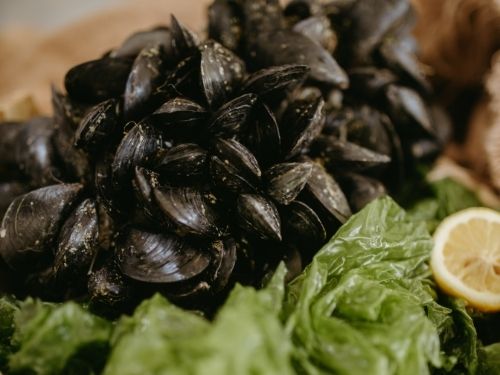 So essential that they make up a large part of the seafood market, mussels are bivalve mollusks protected by a hard shell made of two parts: upper and lower (which holds the edible part).
The shell ranges in color from deep violet to dark blue, with an inner surface that shimmers in shades of pearly blue. The flavorful flesh inside varies in color from yellow to deep orange, yellow for males, orange for females.
At one end of the mussel, you’ll notice black edges and some lighter spots that outline the digestive organs.
Mussels are very common in Italy and quite easy to find, as they are not only abundant along the Adriatic coast but also easily farmed.
How to choose mussels when buying them
Mussels are usually sold in mesh bags of various weights. Before buying, make sure the packaging has a label indicating the origin.
According to European regulations, shellfish must be traceable and carry a health certification.
A second tip when choosing mussels is to guarantee they are closed and heavy (if the shell is open, the mussel may no longer be alive). In fact, if you tap the shell on a hard surface, you should never hear a hollow sound.
Why cleaning mussels is important
A quick note before we explain why cleaning mussels is essential: the rich flavor of these shellfish comes largely from what they eat. While much of their diet consists of organic particles that enhance the taste, it also encourages bacterial growth. And some of those bacteria can be harmful to your health.
After this premise, you’ll understand by yourself that cleaning mussels is essential to eliminate potentially harmful pathogens that might enter your organism and compromise your health.
How to clean mussels

Now that we’ve understood why cleaning mussels is important, let’s get to the heart of the matter: how do you clean them?
First, here’s the basic equipment you’ll need:
- A small knife;
- A stiff-bristled brush.
The 3 steps to effectively clean mussels
First thing first: rinse them under cold running water. After that, use the knife to scrape the surface of the shell and – eventually – remove the barnacles, crustaceans that often attach themselves to the mussels.
The second step is to remove the byssus, a tuft of fibers that sticks out from the side of the shell. You can easily “pull it off” by hand: we suggest you hold the mussel with a dry cloth and give the fibers a firm tug with your other hand.
Finally, use a stiff-bristled brush to scrub the shells and remove any remaining debris or dirt.
How to open and cook mussels

There are two ways to open mussels:
- By opening them raw: insert a knife between the two shells and cut the muscle that holds them together;
- By cooking:
place the mussels in a large pot or pan with a lid. Cook over low heat for a few minutes. The mussels will open up and start cooking right away.
Once they’ve opened, you can use them in soups, pasta dishes, appetizers, and much more: these delicious mollusks go with just about anything!
But if you’re looking for a simple, quick and always crowd-pleasing dish, we have the recipe for you: Cozze alla Tarantina.
Cozze alla Tarantina: how to make them just right
To prepare the Cozze alla Tarantina all you need is to heat a little olive oil, a couple of garlic cloves and a handful of cherry tomatoes in a large pot over high heat. Then, add the mussels while they’re still closed.
Wait for them all to open and occasionally shake the pot, to help the process along. Once all the mussels have opened up nicely, they’re ready to enjoy!
Don’t forget to add plenty of black pepper and chopped parsley, so your Cozze alla Tarantina will be even more flavorful. We also suggest to toast a few slices of bread and serve them on the side for a perfect match for this delicious dish.
How to store mussels
 Mussels can be stored either in the fridge or the freezer.
To store them in the fridge, place them in a compartment and eat them within 2–3 days. Always check that they smell the same as when you first bought them and that none are open or slightly ajar.
You can also freeze mussels for a couple of months, although they might lose a bit of their flavor! One option is to cook them first and freeze them along with their cooking liquid, this will help preserve their taste.
We also have a full article that explains in detail the best way to store mussels.
If you have any other questions, feel free to write to us: we’ll be happy to help! After all, remember: we know everything there is to know about our beautiful sea!

